Double The Life Of Your Gearbox: Why Clean Oil Is No Longer Optional
 The Industry’s Dirty Secret
“We analyse our oil regularly—our machines should be fine.”
This belief has been widely accepted for decades, but 2025’s reliability-focused operations are exposing its flaws. Oil analysis is diagnostic, not preventive. By the time ferrous wear shows up in your reports, damage has already begun.
Modern best practice is no longer about waiting for results. It’s about setting cleanliness targets, preventing contamination, and tracking trends—not just symptoms.
The real game-changer? Contamination control, not just condition monitoring.
Building the Case for Oil Cleanliness
1. What’s Killing Your Gearboxes?
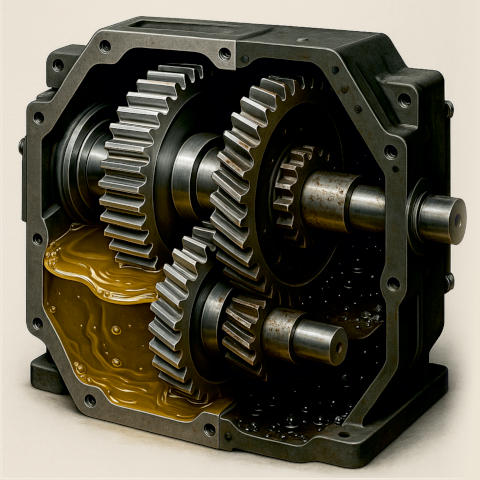
Gearboxes are rugged, yes—but they’re not immune. Hidden enemies like dust, metal particles, and moisture wear them down long before failure is visible.
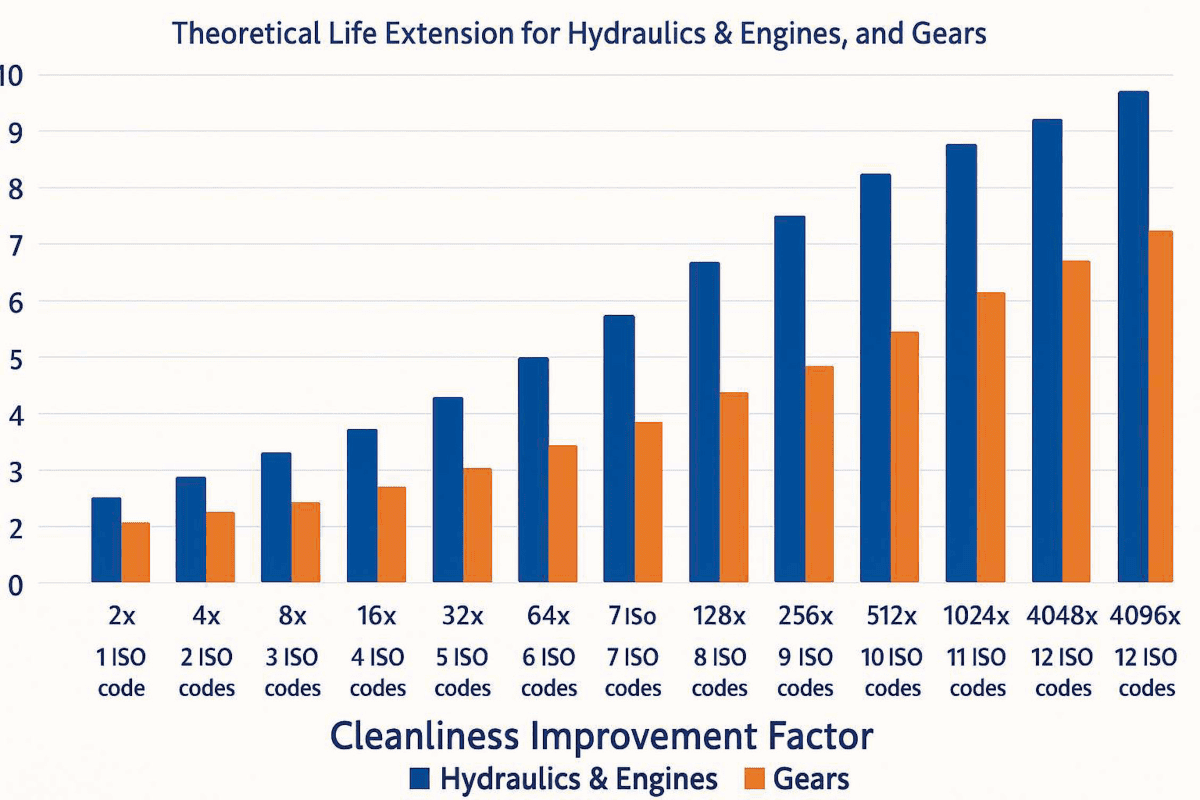
Field data shows that reducing oil contamination from ISO 26/23/21 to 14/11/9 can extend gearbox life by up to 7×.
Fact: Even a 3-point ISO drop = ~50% more life.
2. Understanding ISO 4406 and What “Clean” Means
The industry standard, ISO 4406, assigns oil a cleanliness code based on the number of solid particles in 1 ml of oil, broken down into: ≥4 μm, ≥6 μm, ≥14 μm
| System | Recommended ISO Code |
|---|---|
| Gearboxes | <18/16/13 |
| Turbines | <17/15/12 |
| Hydraulics | <15/13/10 |
| Fresh oil | Cleaner than the system’s requirement |
3. Myths That Are Holding Us Back Myth
| Myth | Why It’s Wrong |
|---|---|
| “Gearboxes are rugged and don’t need clean oil.” | They’re still susceptible to particle-induced wear. |
| “Oil analysis alone ensures reliability.” | It only detects damage that’s already begun. |
| “OEM specs are enough.” | OEMs offer minimum standards, not optimized targets. |
| “Ferrous density tests are sufficient.” | They measure wear, not contamination, and not early enough. |
4. Ferrous Density vs. Particle Trending: Know the Difference
| Method | Tells You | When It’s Useful |
|---|---|---|
| PQ/WPC (Ferrous Density) | Presence of wear metals | After wear has started |
| Particle Counters/Trending Tools | Level of contamination | Before wear begins |
Particle trending (e.g., mesh obscuration or microscopy) is now considered essential for predictive maintenance, especially for gearboxes, which labs often skip due to thick oils and coarse debris.
5. Cleanliness Must Be Contextual
Your industry and environment directly impact oil contamination risk:
- Mining, Cement, Steel - high dust and particulate exposure
- Marine, coastal - higher moisture risk
- Precision systems - ultra-sensitive to fine particles
This makes one-size-fits-all ISO targets ineffective. Custom targets are essential.
6. Don’t Ignore Moisture
Water contamination—even as low as 0.03% (300 ppm)—can:
- Accelerate oil degradation
- Reduce film strength
- Lead to wear and corrosion
Best test method: Coulometric Karl Fischer + Co-distillation
It’s more accurate, especially in oils with additives that interfere with
volumetric tests.
7. Cost-Benefit Thinking: Make It Justifiable
Clean oil is an investment—but one that pays off. Before upgrading filters or tools, reliability teams today ask:
- What’s our average cost of repair?
- What’s our downtime worth per hour?
- How much longer can our gearboxes run if contamination drops 6 ISO points?
Then they run a 5-year ROI model. The answer almost always favours action.
What Does 18/16/13 Mean? A Simple Guide to Understanding ISO 4406 Cleanliness Codes
The ISO 4406 standard tells you how clean (or dirty) your oil is by counting how many particles of different sizes are floating in every millilitre of it.
| ISO Code Number | Particle Size | Approx. Particles/ml |
|---|---|---|
| 18 | ≥ 4 μm | 1,300 – 2,500 |
| 16 | ≥ 6 μm | 320 – 640 |
| 13 | ≥ 14 μm | 40 – 80 |
The lower the number, the cleaner the oil. Even a one-point improvement means up to 50% fewer particles and longer machine life.
From Reaction to Prevention
The days of relying solely on lab reports and OEM suggestions are over.
Clean oil is no longer just about compliance—it’s about performance.
If you’re serious about:
- Increasing uptime
- Reducing unplanned breakdowns
- Extending the life of high-cost gearboxes
…then your strategy must evolve from “test and react” to “target, clean, and trend.”
Action Checklist:
- Set ISO cleanliness targets for all systems
- Monitor particle counts—not just ferrous debris
- Customize targets based on environment & equipment
- Validate ROI with long-term cost modelling
- Don’t just test your oil—protect it
