The Hazy Sample: A Lab Error That Shook A Lube Oil Blending Plant
 Narrative of the Incident
One small dash in an additive code was all it took to derail a carefully planned test. In the laboratory of a Lube Oil Blending Plant (LOBP)—renowned for its disciplined processes and methodical testing protocols—a new formulation for an advanced engine oil blend had just arrived from international collaborators. Before pilot production, the formulation needed to be validated through a lab-scale blend, checking appearance, viscosity, and stability.
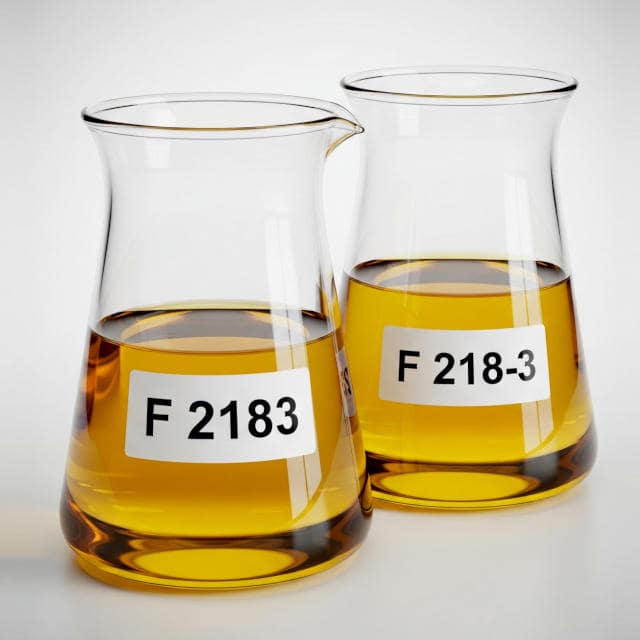
The recipe clearly called for a proprietary dispersant inhibitor package labelled “F 2183.” An experienced chemist was assigned the task and, following routine procedure, prepared the trial blend. But within an hour, the sample began to show an unusual haze. The formulation had already been vetted and approved abroad, so the instability was unexpected.
An audit of batch records and lab logbooks uncovered the problem: instead of “F 2183,” the chemist had mistakenly used “F 2183”—an anti-wear additive intended for a completely different set of formulations. The nearly identical labels, stored side by side in inventory, had led to a critical misread.
Error Analysis:
This case, while seemingly minor due to the lack of downstream production, served as a critical reminder of how subtle lapses can cascade into larger issues. The following factors contributed to the incident:
1. Similar Naming Convention:
- Both additives bore almost identical nomenclature: “F 2183” and “F 218-3.”
- The visual similarity led to cognitive oversight, especially in a fast-paced lab environment.
2. Labelling & Inventory Arrangement:
- Additives were arranged alphabetically, and both were stored on adjacent shelves.
- Labels were not colour-coded or categorized based on function (e.g., DI package, anti-wear).
3. No Secondary Verification:
- The blending process did not mandate a peer review or checklist-based confirmation.
- A single chemist handled the entire procedure, leading to unchecked assumptions.
4. Ambiguity in Communication:
The formulation received via email only mentioned additive codes, without commercial or descriptive names.
- There was no appended Material Safety Data Sheet (MSDS) or product description for F 2183.
5. Training Gaps:
- Although experienced, the chemist had not undergone refresher training in inventory control or additive identification. • There was over-reliance on human memory and judgment.
 Corrective and Preventive Actions (CAPA):
1. Inventory Management System Overhaul:
- Additives were reclassified and relabelled with both code and function.
- A colour-coding system was introduced to distinguish between additive types (e.g., dispersants, anti-wear, detergents).
2. Digital Inventory Integration:
- A barcode-based tracking system was implemented.
- Lab chemists are now required to scan each additive into a digital log before dispensing.
3. Two-Person Verification Rule:
- All lab blends now require dual sign-off before proceeding.
- This includes one chemist to prepare and another to cross-verify additives against the formulation.
4. Training & Awareness:
- A refresher module focusing on additive classification, formulation review, and common error scenarios was introduced.
- Monthly toolbox talks are now held to revisit past incidents and derive learning.
5. Improved Communication Protocols:
- All new formulations from collaborators must include the additive’s descriptive name, CAS number, and technical data sheet.
- Standardized templates were adopted for formulation communication.
Lessons Learned:
- Precision in Labelling Is Paramount: In technical environments, even a minor variation in names (a dash, a space, a decimal) can lead to critical errors.
- Assumptions Must Be Checked: Experience does not exempt one from the discipline of cross-verification.
- System Design Should Prevent Errors: The environment should be structured in a way that makes the wrong choice difficult, not easy.
- Communication Matters: Technical accuracy should be complemented by clarity and completeness in all external and internal communications.
- Training Is a Continuous Need: No matter how experienced the personnel, periodic training is essential to keep knowledge fresh and biases in check.
Conclusion:
This lab incident, although controlled in scope, highlights the fragility of technical processes when human factors and system weaknesses intersect. It illustrates the importance of robust systems, clear communication, and an organizational culture that encourages vigilance. Ultimately, the hazy sample served not just as a failed test but as a clear lens into how operations can—and must—evolve to prevent similar occurrences in the future.
