Why Your Coolant Fails
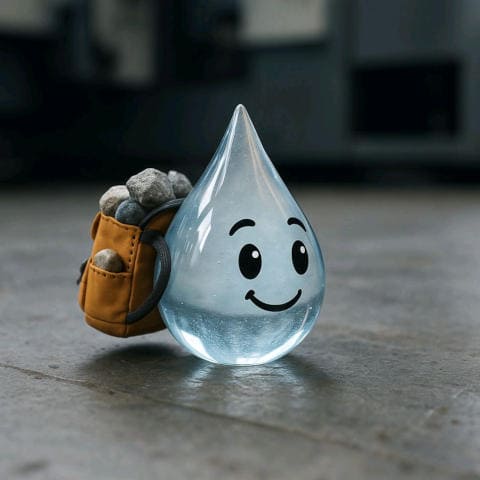 The Hidden impact of Water Quality
The Frustrating Reality of the Shop Floor
Anyone who has worked around CNC machines has seen the symptoms: the pungent ‘Monday morning’ odour, sticky residues on the ways, flash rust on parts, and foam over-flowing the sumps. The immediate assumption is that the coolant oil is ‘bad’ or that the supplier has lowered their quality.
But the truth is often surprising. Most coolant failures are not caused by the oil, but by the water it is mixed with. Because coolant is 90–95% water, your water quality dictates your tool life and maintenance budget. If the water chemistry is wrong, your performance will be wrong, no matter how premium the oil is.
What is Your Water Carrying?
Water that looks crystal clear to the naked eye is often loaded with dissolved minerals. Your coolant system doesn’t see ‘water’; it sees a chemical load of ions picked up from soil, limestone, and deep underground rock formations.
The primary culprits are Calcium (Ca2+) and Magnesium (Mg2+), which define water hardness. However, other ‘hidden passengers’ like Chlorides, Sulfates, and Silica act as aggressive agents that quietly disrupt coolant chemistry, shorten tool life, and drive up costs.
How Minerals Sabotage Your Results
Coolant concentrate is a finely balanced chemical engine. When the mineral load in your water is too high, it triggers a chain reaction of shop-floor problems:
-
Emulsion Splitting: Calcium and magnesium react with emulsifiers, causing the oil to separate and float. This robs the tool of lubrication, leading to poor surface finishes.
-
‘Calcium Soaps’: Hardness ions react with fatty acids to form sticky white deposits that choke filters, pipes, and high-pressure nozzles.
-
The Corrosion Paradox: Hardness neutralizes corrosion inhibitors. The result is ‘flash rust’ on machine beds and brown staining on finished components.
-
Bacterial Breeding: Hard water weakens biocides and drops the pH, creating a playground for bacteria that cause foul odours and skin irritation.
The Hidden Cost of ‘Free’ Water
Ignoring water quality is an expensive mistake. Plants using uncontrolled hard water typically experience 30–50% higher coolant consumption due to premature emulsion breakdown. When you factor in machine downtime for cleaning and reduced tool life, “free” tap water becomes one of the most expensive raw materials in your plant.
The Shop-Floor Auditor: Quick Reference Guide
Use these benchmarks to diagnose your water and stabilize your process.
| Parameter | The ‘Green Zone’ | Impact if Too High |
|---|---|---|
| Hardness | 80–150 ppm | Emulsion splitting, sticky scum |
| TDS | < 250 ppm | Rapid mineral buildup in sumps |
| Chlorides | < 50 ppm | Pitting and “Flash Rust” on beds |
| pH Level | 6.5 – 7.5 | Additive instability / Biocide failure |
| Symptom | Probable Cause | Practical Fix |
|---|---|---|
| Foul Odor | Low pH / Hard Water | Check pH; top up with soft water + oil |
| Floating Oil | Hardness >300 ppm | Drain 20%; top up with RO water |
| Sticky Residue | Calcium Soap | Clean filters; switch to softer source |
| Excessive Foam | Water “Too Pure” (<30 ppm) | Blend 20% tap water into your RO water |
III. The Golden Rules of Mixing and Top-Ups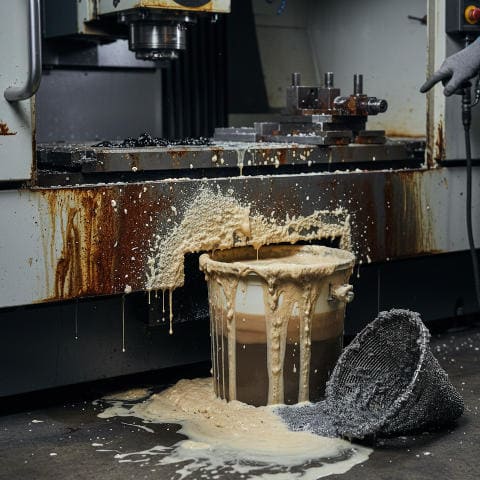
1. The Evaporation Trap
Evaporation concentrates minerals. As water evaporates, minerals stay behind; if you top up with hard water daily, the hardness levels will eventually double or triple.
The Fix: Always use RO or softened water for daily top-ups to maintain a stable mineral balance.
2. The O-I-L Rule
Never add water to a container of oil concentrate. This creates an unstable ‘invert emulsion.’ To ensure a stable bond, always add Oil In Liquid. Slowly pour the concentrate into the water while stirring.
Conclusion: Control Your Water, Own Your Profits
The math is simple: You cannot have a stable emulsion with unstable water. In modern machining, coolant management is no longer a ‘janitorial’ task—it is a critical engineering process.
If you treat your water as a precision raw material rather than a basic utility, you stop being a ‘firefighter’ dealing with smells and rust. Understanding the minerals your water carries is the most important, yet most overlooked, part of shop-floor reliability. Stop fighting your coolant and start managing your water. Your tools, your machines, and your bottom line will thank you.
